

GARAGE CHARGING • BUYER’S CASE STUDY
Best Tesla Charger for Your Garage:
Wall Connector vs. Universal
Choose the charger that fits your vehicle today—and the garage you plan to use tomorrow.
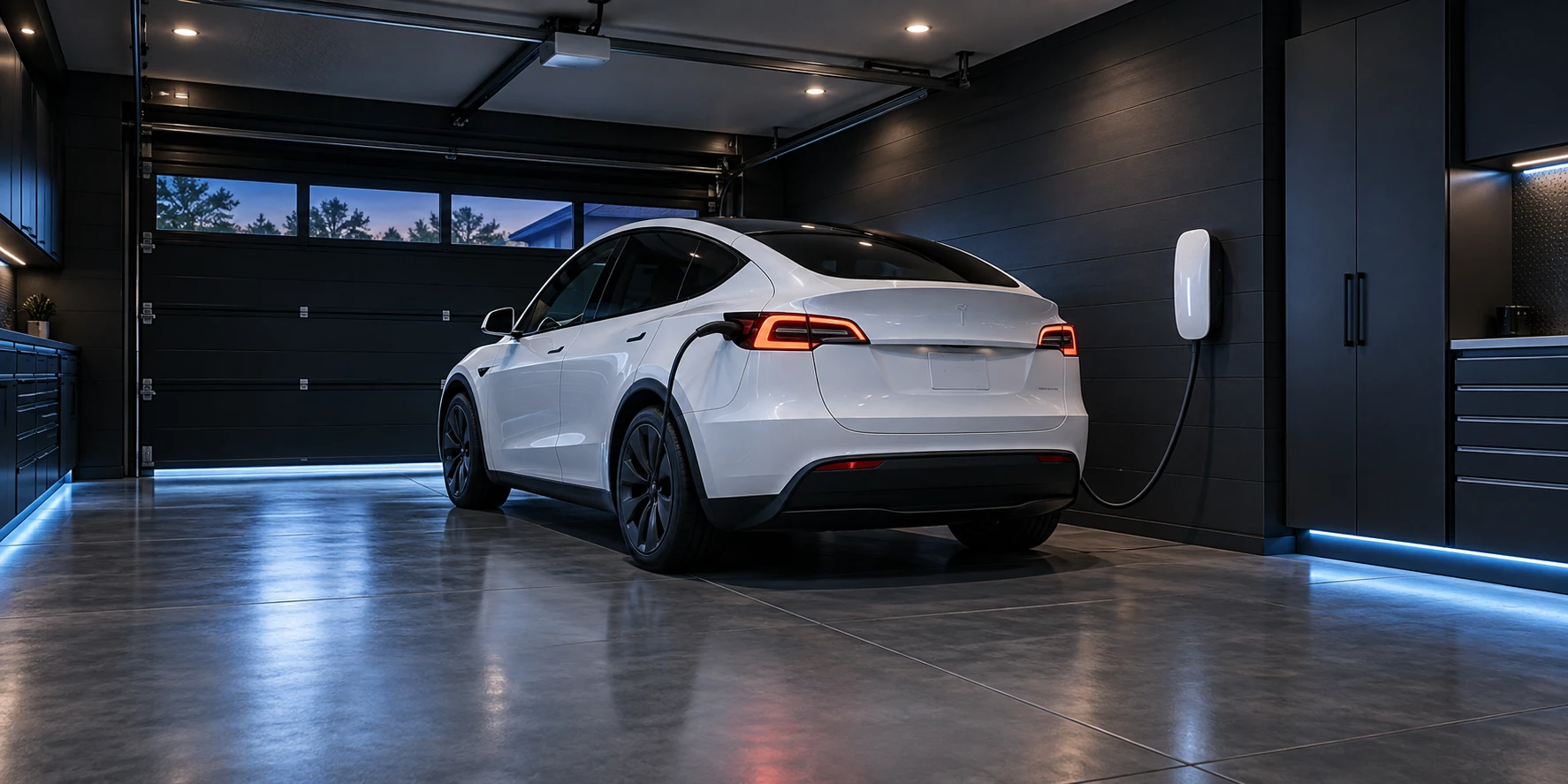
Which Tesla garage charger is best?
For a Tesla-only garage, our recommendation is the standard Tesla Wall Connector. For a garage that needs both NACS and J1772 connections, we recommend the Universal Wall Connector. Its built-in adapter adds flexibility without increasing the maximum charging output. The Mobile Connector remains worth considering when portability or an existing suitable outlet matters most.
These are editorial recommendations based on Tesla’s published specifications and the example below—not results from a hands-on product test. Tesla’s home-charging comparison confirms that both wall-mounted options have the same maximum power.
Tesla home charger comparison
| Charger | Our recommended use | Main distinction | Listed hardware price* |
|---|---|---|---|
| Wall Connector | Tesla-only or compatible NACS garage | Up to 11.5 kW / 48 A; 24-foot cable | $585 |
| Universal Wall Connector | Households needing NACS and J1772 | Same maximum output, plus integrated J1772 adapter | $660 |
| Mobile Connector | Portable charging or a reviewed existing outlet | Outlet-based charging; Tesla lists up to 7.6 kW on 240 V | $300 |
*Tesla U.S. product-page prices observed September 29, 2026. Hardware only; installation, tax and shipping are separate. Confirm current price, availability and exact vehicle compatibility before purchase. Maximum output is not a promise of your vehicle’s charging speed.
Case study: a two-car garage with one Tesla today
Illustrative planning scenario: This is a hypothetical household, not a completed EV Garage Install project. No customer results, measured charging times or installation savings are claimed.
Consider a homeowner planning a Frisco garage charger installation . The household owns a Tesla Model Y, drives about 40 miles on a typical day and parks at home for eight hours overnight. A second EV with a J1772 AC charging inlet is a realistic future purchase.
The homeowner wants an easy daily routine, a tidy cable location and equipment that can serve either car. They do not currently need to charge two vehicles simultaneously or power the house during an outage.
Step 1: define the charging need
For this example only, assume daily driving requires 14 kWh from the wall, including charging losses. At a sustained 7.7 kW, replacing that energy would take about 1.8 hours. At 11.5 kW, it would take about 1.2 hours. Both fit comfortably inside the assumed eight-hour window.
Those are calculations, not measured results: energy divided by power. Actual time depends on the vehicle’s AC charging limit, battery conditions, other energy use and the installation’s configured output. The exact Model Y version must be checked before assuming it can accept 48 amps.
Step 2: choose for the second vehicle
At the observed hardware prices, Universal costs $75 more than the standard Wall Connector. In this scenario, we would select Universal because the household has a specific reason to need its J1772 adapter. The benefit is easier compatibility with the planned second vehicle—not faster charging of the Tesla.
Step 3: approve the installation before buying
The recommendation remains conditional on an electrician’s assessment and confirmation of both vehicles’ compatibility. The proposal should identify charger placement, electrical work, applicable permit and inspection steps, setup, and the final owner walkthrough.
Decision: Universal Wall Connector is the better fit for this example. If the second-EV plan disappears and the garage remains Tesla-only, the standard Wall Connector provides the same maximum charging capability at the lower listed hardware price.
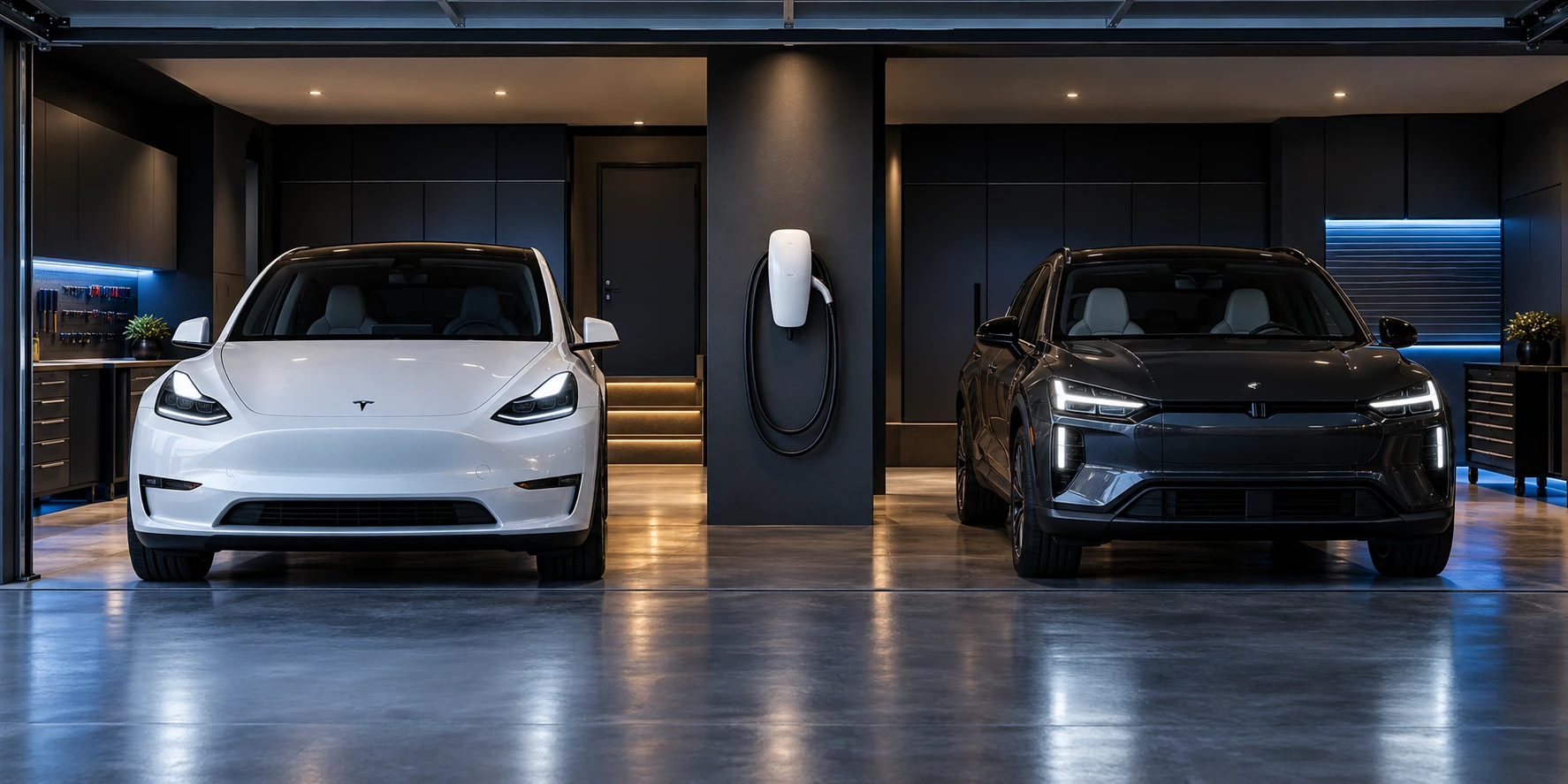
Three garage examples that change the recommendation
Example 1: one Tesla and a straightforward daily routine
For a Plano homeowner keeping one compatible Tesla, the standard Wall Connector is our default recommendation. Tesla lists app scheduling, Wi-Fi updates and a 24-foot cable. Paying extra for Universal is optional unless there is a specific compatibility or system-design reason.
Example 2: a suitable outlet already exists
A Dallas homeowner who values portability may find Mobile Connector sufficient. Tesla describes different charging rates for household and 240-volt outlets. An existing receptacle should be assessed for the intended charging use; its appearance alone does not establish suitability. Compare the complete installed cost before deciding a new outlet is cheaper than hardwiring.
See Tesla’s Mobile Connector support guide for the current bundle and supported charging arrangements.
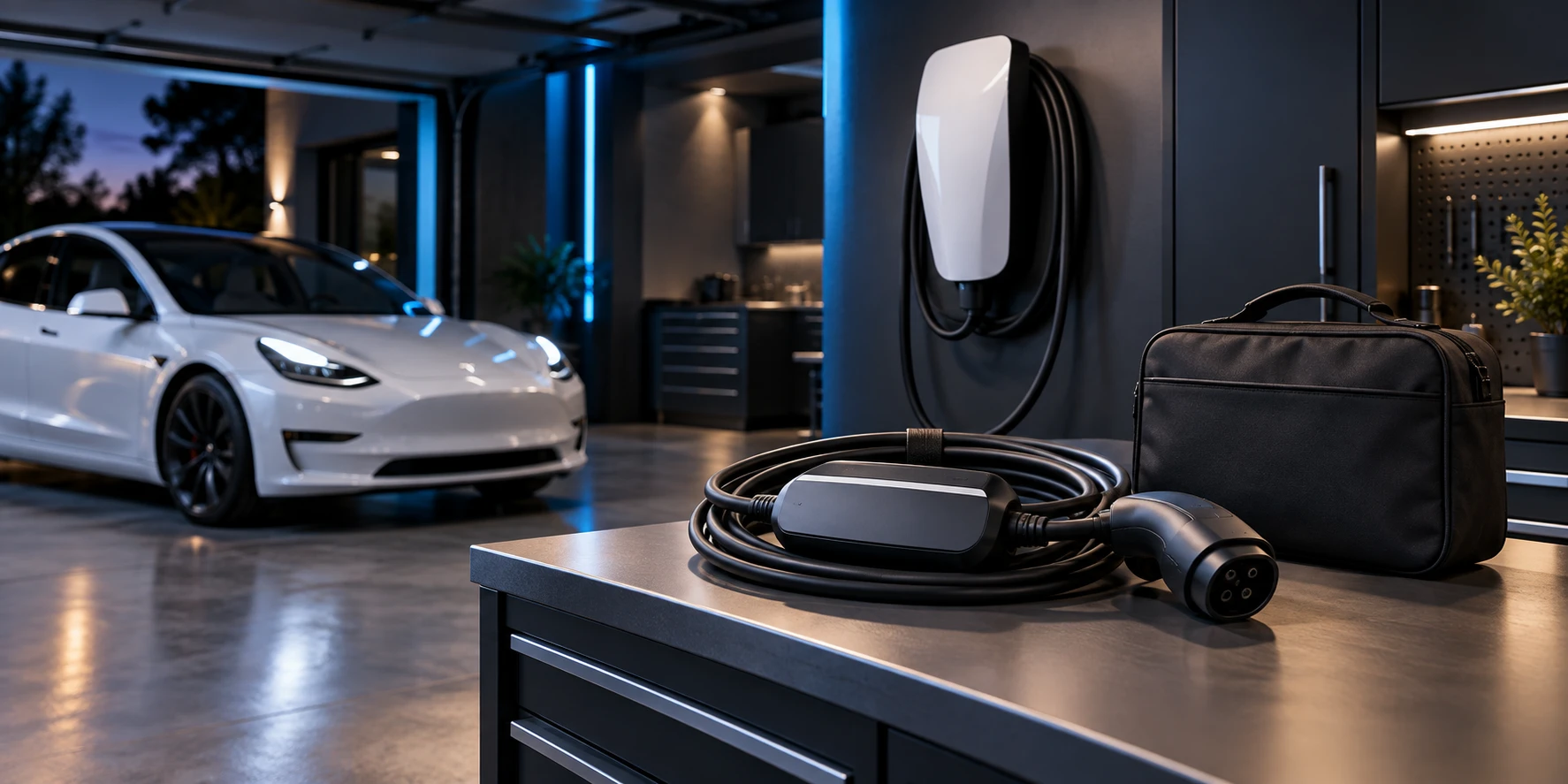
Example 3: two cars need charging at the same time
A single Universal Wall Connector still charges one connected vehicle at a time. If both cars need overnight charging without swapping the cable, ask about multiple Wall Connectors and a compatible power-sharing design. Tesla’s power-management guide explains group charging and separately describes dynamic management, which requires an approved meter. Do not assume every feature can be combined in every system.
The installation matters as much as the charger
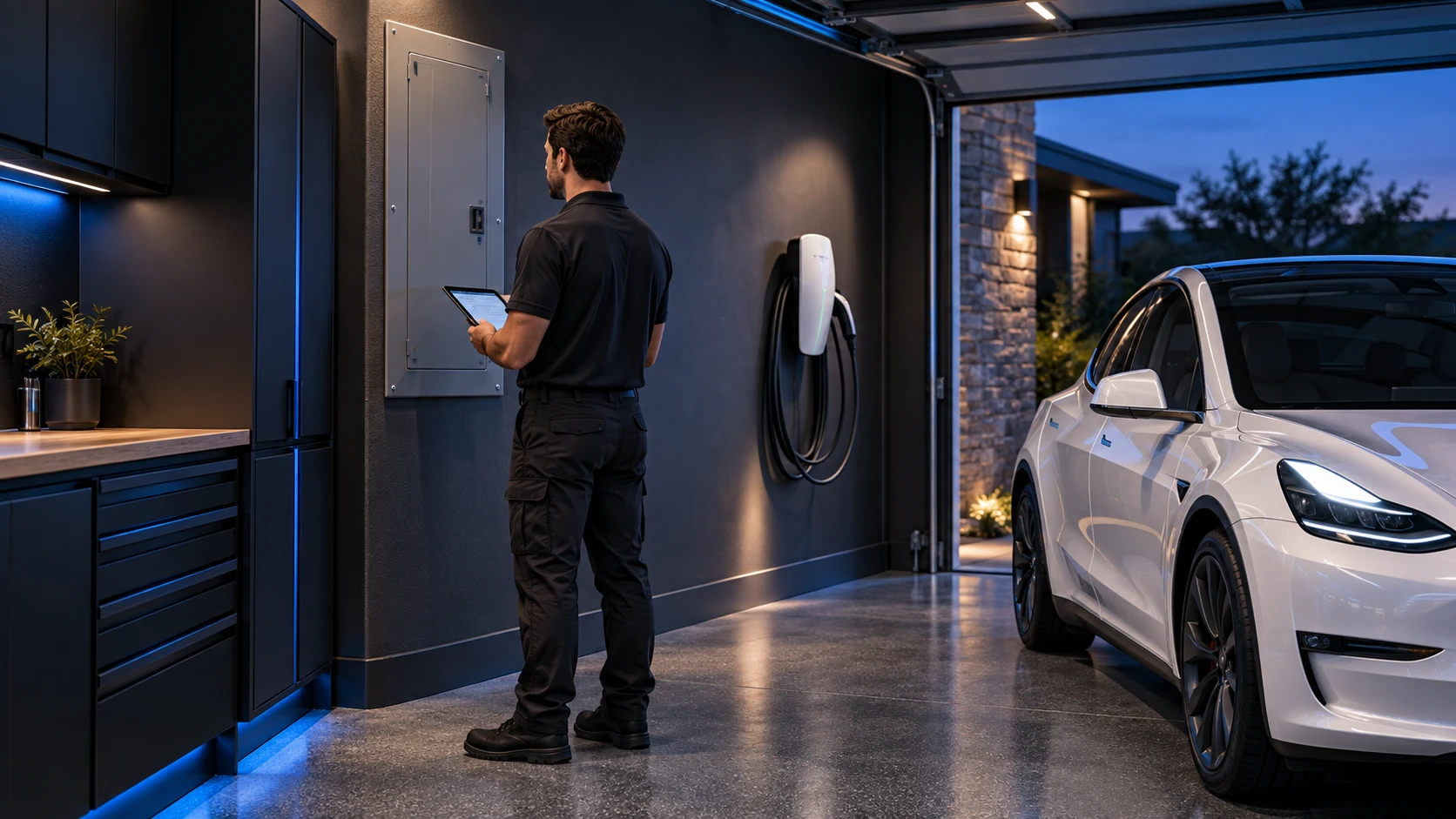
Before ordering, ask the installer to review electrical capacity, the wiring route, the actual vehicle charging limit and your parking habits. A higher equipment rating does not automatically mean the home needs—or supports—the highest output.
Tesla’s Wall Connector charging table lists multiple installation power levels. Its maximum 48-amp output corresponds to a 60-amp circuit in that table. The electrician must determine the appropriate design and settings for the property.
Placement deserves equal attention. Park where you normally park, account for door openings and storage, and confirm the cable reaches without strain. Tesla’s installation-location guidance also addresses cable clearance and Wi-Fi reception.
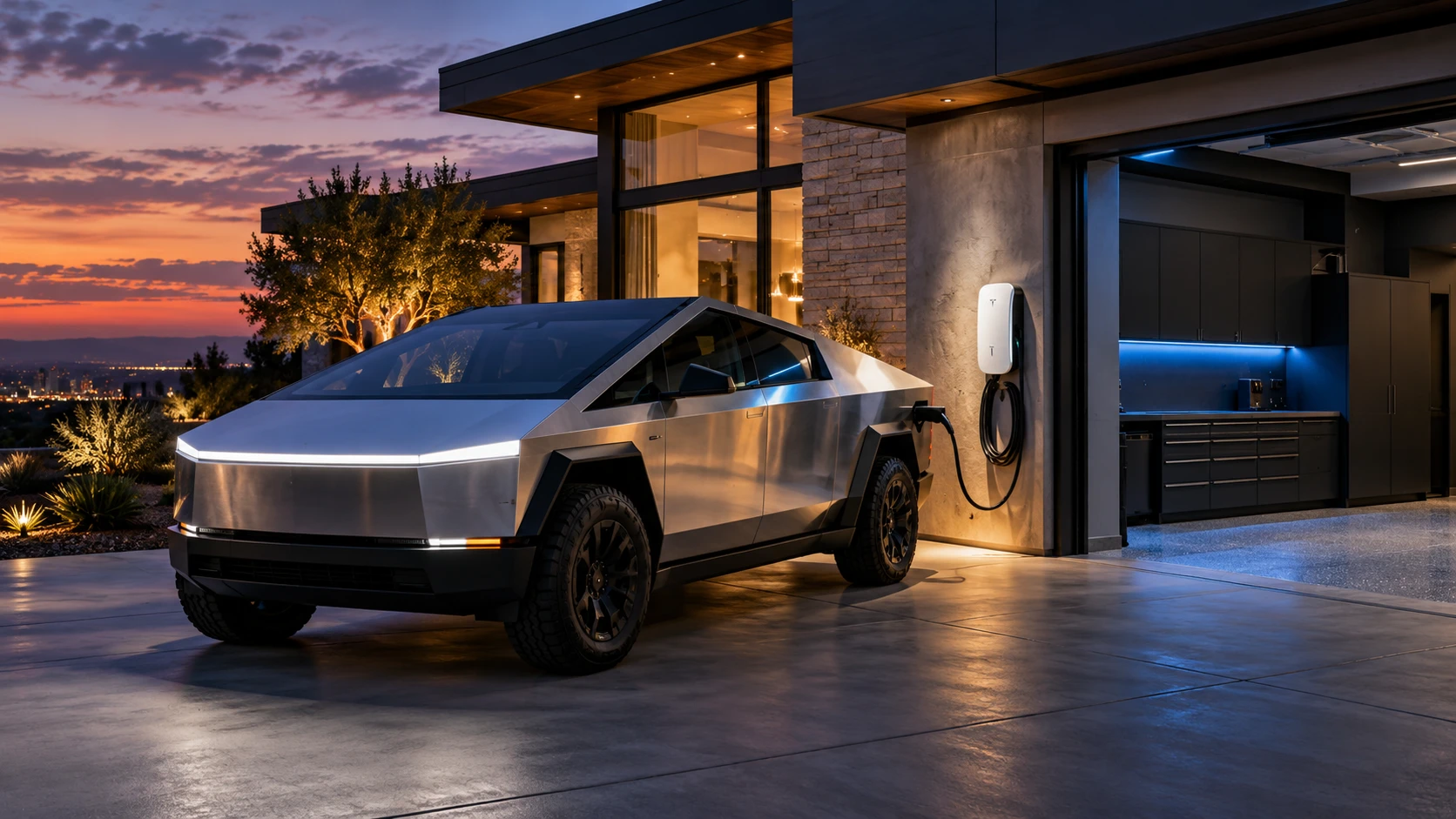
What if the vehicle is a Cybertruck?
Begin by separating ordinary vehicle charging from home backup. Buying a Universal Wall Connector alone does not create an operational backup system.
For a home without Powerwall, Tesla’s Powershare guidance lists a Universal Wall Connector and Powershare Gateway. Other configurations depend on supported equipment and software availability. Ask for a separate system proposal if home backup is part of your goal, and confirm current compatibility before ordering.
Our Cybertruck bidirectional-charging guide introduces the planning questions for local homeowners.
Frequently asked questions
What is the best Tesla charger for a home garage?
Our default choice for a Tesla-only garage is the standard Wall Connector. We favor Universal when the household needs both NACS and J1772 compatibility. The best selection depends on the vehicles, available electrical capacity and daily charging routine.
Does Universal Wall Connector charge a Tesla faster?
No. Tesla lists the same 11.5 kW maximum for both wall-mounted products. Universal’s main advantage in this comparison is its integrated adapter.
Can I use Mobile Connector every day?
It can meet some daily charging needs when the supported outlet, equipment and installation are suitable. Tesla recommends Wall Connector for home charging. Compare your required daily energy and available charging window before choosing.
Will my Tesla always charge at 48 amps?
No. The vehicle’s onboard charger and the installation’s configured limit both matter. Check your exact model and version; some vehicles accept less than the wall unit’s maximum.
Do I automatically need a panel upgrade?
No automatic conclusion is possible from the charger model alone. Ask an electrician to assess capacity and whether a supported lower-output or power-management design meets your needs.
Can Universal charge two vehicles at once?
One unit has one vehicle charging connection. Simultaneous charging requires an appropriate multi-unit installation, with electrical capacity or compatible power sharing addressed in the design.
Does a Universal Wall Connector power my house?
Not by itself. Cybertruck home backup requires a supported Powershare system, appropriate installation and current software support for the configuration.
What should I send for an installation quote?
Send your address, vehicle model and year, desired charger, parking-area photos and safely accessible exterior panel-label photos. Note any second-EV or backup-power plans. Do not remove electrical covers for photos.
LET’S PLAN YOUR GARAGE
The right charger starts with the right installation plan.
EV Garage Install can discuss your vehicle, parking layout and proposed electrical scope. Review our installation services and assessment process , then send your project details.
Product specifications and prices can change. All five images are conceptual illustrations and should not be used to identify exact product components or installation requirements. Recommendations are based on the linked manufacturer information and the stated hypothetical needs.