


HOME EV CHARGING • PRACTICAL PLANNING
Plan for the driver.
Make charging easier.
Discuss reach, movement and cable handling before choosing the final garage layout.
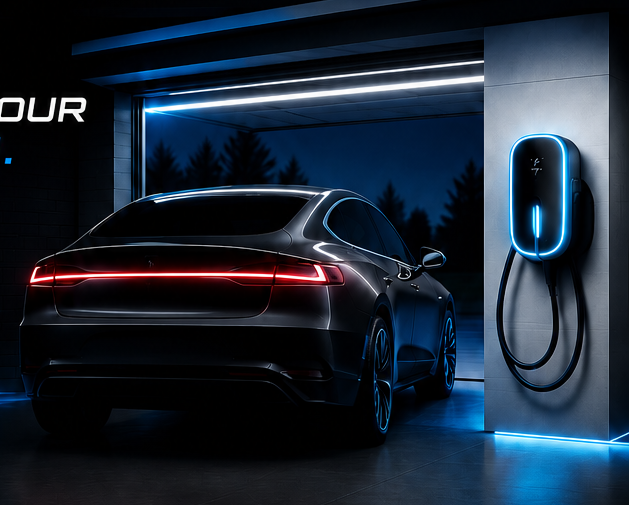
Accessible home EV charging starts with the person who will use it. A charger can fit on a wall and still be awkward to reach from the driver’s usual parking position. Before installation, walk through the complete routine with the driver and the installer.
Map the everyday routine
Begin with parking, opening the vehicle door and moving toward the charge port. Consider mobility equipment, a caregiver’s position and the space needed to carry groceries or reach the house. Ask the driver which movements are difficult rather than assuming a preferred solution.
Next, discuss plugging in, returning the handle to its holder and storing the cable. Include the route used when the car is absent. A layout should work during ordinary household activity, not only during a carefully arranged demonstration.
Use accessibility guidance with the right scope
The U.S. Access Board’s EV charging guidance discusses maneuvering space, connector handling, cable management and reachable controls. It distinguishes enforceable requirements for covered facilities from additional design recommendations. This home-planning article does not establish which legal requirements apply to a particular property.
For a shared residential facility or other covered site, ask the project designer to verify the applicable obligations. For an individual garage, discuss practical usability directly with the driver and the installer. Do not assume that a consumer product label proves the entire location is accessible.
Try the routine before final placement.
Use the actual vehicle and a safe demonstration of the proposed location. Ask whether the driver can approach the controls and handle without stretching, losing balance or moving stored items.
Bring specific questions to the assessment
- Can the driver reach the connector holder from the normal approach?
- Is there room to move around the car with its door open?
- Will the cable obstruct the path to the home?
- Is the screen readable in normal garage lighting?
- Can an approved cable-management option make the task easier?
- What changes if the next vehicle has a different charge-port position?
Keep manufacturer placement and installation requirements in the discussion. A convenient location still needs professional electrical assessment. Do not add improvised cable extensions or modify a connector to make it reach.
Put the agreed features in the scope
Ask the proposal to identify the mounting location, cable-storage arrangement and any work needed to keep the route usable. If shelves or other items must move, state who handles them. Photographs and a simple marked layout can prevent different interpretations.
At completion, have the intended driver demonstrate the normal charging routine. Make a short list of any unresolved usability issues before considering the layout finished. Our EV installation services and project process can help frame the initial conversation.
Accessible home EV charging questions
Is there one mounting position that works for everyone?
No. Discuss the driver’s reach, the vehicle inlet and the available space together. Product instructions and applicable project requirements also matter.
Can a longer cable solve every access problem?
No. It may introduce handling or storage difficulties. Ask about the complete routine, including returning the connector after charging.
What should I send before the visit?
Send safe photos of the parking space, vehicle inlet and route to the house. Describe the movements you want to make easier; medical details are not needed to begin the discussion.
SOURCES CHECKED OCTOBER 3, 2026
U.S. Access Board EV charging design guidance · DOE accessibility resource
LET’S PLAN YOUR INSTALLATION
Your garage. Your vehicle. A clear plan.
Send your vehicle details and safe photos of the proposed charging location. We will discuss the scope and next assessment step.