

PORTABLE EV CHARGING • GARAGE PLANNING
PORTABLE EV CHARGING EQUIPMENT: PLAN THE OUTLET, CORD AND DAILY ROUTINE
A portable charging cord is still electrical equipment. The useful plan starts with the vehicle, a suitable circuit and a parking layout that does not invite extension cords or floor hazards.
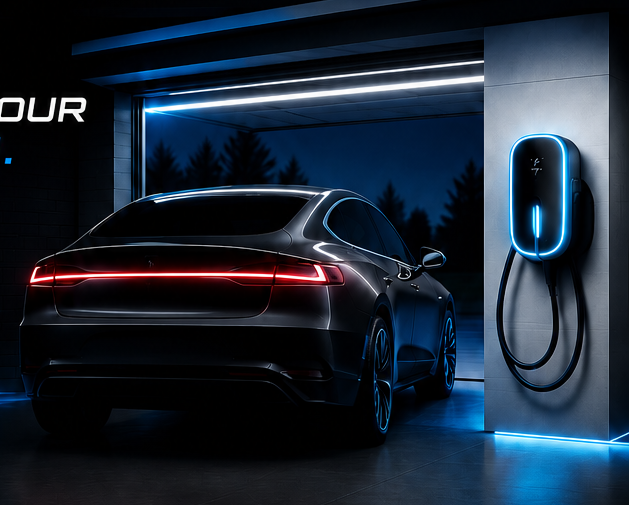
Portable charging equipment can be useful when the same vehicle charges in more than one place, but “portable” does not make the electrical side temporary. The receptacle, branch circuit, grounding, connection point and cable route all need to suit the equipment and the vehicle. A good installation conversation therefore begins with the charger label and vehicle documentation—not a guess based on plug shape.
Start with the equipment instructions
Record the portable unit’s manufacturer, model, input voltage, maximum current and plug type. Then check the vehicle maker’s charging guidance. The U.S. Department of Energy notes that charging time depends on battery capacity, the vehicle’s onboard charger, equipment power and other conditions. Two vehicles connected to similar outlets can therefore charge at different rates.
Bring those details to a qualified electrician. EV supply equipment is a continuous electrical load, so conductor sizing and overcurrent protection are design decisions for the actual equipment and applicable adopted code. A higher-rated receptacle does not create additional electrical capacity by itself.
Plan the receptacle and connection
- Dedicated use: Identify what else, if anything, is served by the proposed circuit.
- Equipment listing: Look for safety certification by a nationally recognized testing laboratory and follow the manufacturer’s installation and use instructions.
- Receptacle condition: A loose, damaged, discolored or unusually warm connection needs professional evaluation. Stop using equipment that shows damage or repeated faults.
- No improvised reach: Do not assume a household extension cord, travel adapter or daisy-chained device is acceptable. Use only accessories the equipment and vehicle manufacturers expressly permit.
Map the daily cable route
Park the vehicle in its normal position and locate the charge inlet. The cable should reach without being stretched across a walkway, pinched by the garage door, driven over or wrapped tightly while energized. Decide where the control box and connector will rest when not in use. A wall-mounted holster or cable organizer can keep the floor clear without changing the manufacturer’s required orientation.
Decide whether portability is really the priority
If the cord remains in the same garage every day, a hardwired Level 2 station may reduce repeated plug handling and offer a cleaner cable arrangement. If travel is the reason for portability, keep the adapters, storage method and destination power requirements in view. The right choice depends on actual driving needs, vehicle acceptance rate, available service capacity and manufacturer requirements.
Questions to answer before requesting a quote
- Which vehicle or vehicles will use the equipment?
- How many miles normally need to be replenished overnight?
- Where is the charge inlet when the vehicle is parked?
- What are the portable unit’s exact electrical ratings?
- Will the unit travel regularly or remain connected?
FAQ
Can any 240-volt receptacle charge an EV?
No. The circuit, receptacle, plug, equipment rating, installation instructions and applicable code all have to align. A qualified electrician should evaluate the proposed connection.
Is a portable charger always slower than a wall station?
Not necessarily. Actual charging power is limited by the circuit, equipment and vehicle. Compare ratings rather than the enclosure style.
Should I unplug the portable unit after every session?
Follow the equipment manufacturer’s instructions. Repeated connection cycles, weather exposure and storage practices can affect the preferred setup.
What should make me stop charging?
Stop and seek qualified help for visible damage, burning odor, unusual heat, arcing, water intrusion or repeated fault indications. Do not open or repair energized equipment yourself.
SOURCES CHECKED OCTOBER 4, 2026
U.S. Department of Energy: Charging Electric Vehicles at Home · U.S. Department of Energy: Charging Equipment · ENERGY STAR: EV Chargers
PLAN A SAFER HOME-CHARGING SETUP
Talk through the vehicle, parking position and electrical service before equipment is selected.
EV Garage Install can review the installation scope and prepare a practical quote for a code-compliant home charging circuit.