

INSTALLATION RECORDS • FUTURE SERVICE
HOME EV CHARGER INSTALLATION RECORDS: WHAT TO KEEP AND WHY
A small, organized installation file can make later troubleshooting, warranty questions, vehicle changes and property handoffs much easier.
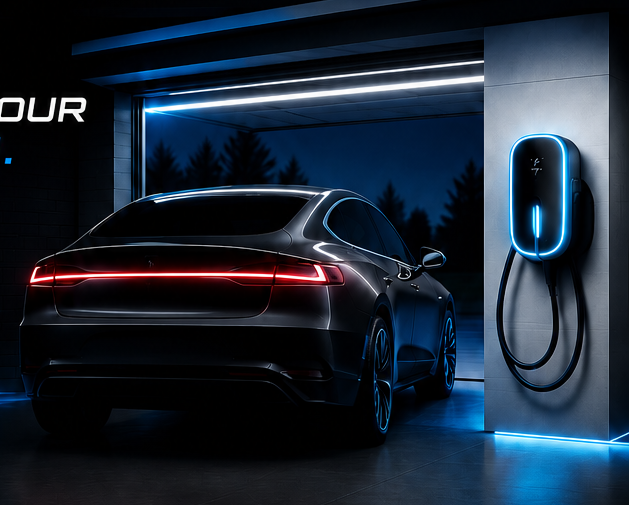
Once a home EV charger is working, the paperwork can disappear into an email inbox or garage drawer. That makes future questions harder: Which circuit serves the station? What model is installed? Who owns the connected account? Was a permit closed? A concise installation record gives the homeowner and future electrician a reliable starting point without opening energized equipment.
Keep the equipment identity
- Manufacturer, exact model and serial number
- Product data sheet and installation manual version
- Connector type and maximum configured output
- Purchase record and warranty terms
- Manufacturer support contact and app name
Do not assume the maximum number printed in marketing material is the commissioned setting. The circuit, equipment configuration and vehicle can each limit charging power. Record both the product rating and the final setting documented at commissioning.
Keep the circuit and installation information
Save the electrical contractor’s invoice and scope, panel/circuit identification, breaker rating, conductor information supplied by the installer, routing notes and any load-management configuration. A simple photo of the labeled breaker and finished station can help later, but it should not expose Wi-Fi credentials, account information or other sensitive data.
If the local authority required a permit or inspection, keep the permit number, inspection result and closeout record. Requirements differ by jurisdiction and property; a model electrical code does not prove what a particular city adopted or required on the installation date.
Record commissioning without creating a security problem
Note the date the station was energized, firmware version if available, configured current, Wi-Fi network name and account owner. Keep passwords and recovery codes in a secure password manager rather than the installation folder. If access control or schedules are enabled, describe the intended settings and authorized household users.
Save a baseline charging observation
After commissioning, record one ordinary session: starting battery percentage, approximate session length, energy delivered if the equipment reports it and any relevant vehicle limit. This is not a guaranteed performance standard. It is simply a reference that can help describe a later change. The Department of Energy notes that charge time varies with battery capacity, onboard charger, equipment power, state of charge and other factors.
Update the file when something changes
Add records when a vehicle changes, firmware is updated, charger settings are modified, the electrical service or panel is replaced, or a repair is performed. If a connected station is transferred with the home, remove personal data as directed by the manufacturer and give the new owner the manuals and installation facts—not your account credentials.
Use records to make service calls more precise
When requesting help, share the model, observed indicator or error, when the behavior began, whether it affects one or multiple vehicles and whether any electrical or network work preceded it. Do not remove covers, tighten energized connections or defeat protective devices to collect more information.
FAQ
Do I need to keep every charging-session log?
Usually not. Keep the level of history useful for your household, plus representative baseline information and records associated with faults or service.
Where should permit information come from?
Use the local authority’s records or the contractor’s closeout documents. Do not infer local requirements solely from a national model code.
Should charger passwords be written on the unit?
Avoid exposing credentials. Store access information securely and keep only non-sensitive ownership and recovery notes in the installation file.
What records matter when changing vehicles?
Keep the charger model, connector, circuit rating, configured output and installation documentation. Then compare them with the new vehicle manufacturer’s charging requirements.
SOURCES CHECKED OCTOBER 4, 2026
U.S. Department of Energy: Charging Equipment · ENERGY STAR: EV Chargers · Tesla: Wall Connector Troubleshooting
PLAN A SAFER HOME-CHARGING SETUP
Talk through the vehicle, parking position and electrical service before equipment is selected.
EV Garage Install can review the installation scope and prepare a practical quote for a code-compliant home charging circuit.