


NORTH TEXAS HEAT • HOME CHARGING
HOT-WEATHER HOME EV CHARGING: WHAT NORTH TEXAS DRIVERS SHOULD OBSERVE
Heat can change vehicle and charger behavior. Use equipment rated for the location, preserve airflow and follow the vehicle and charger manufacturers’ limits.
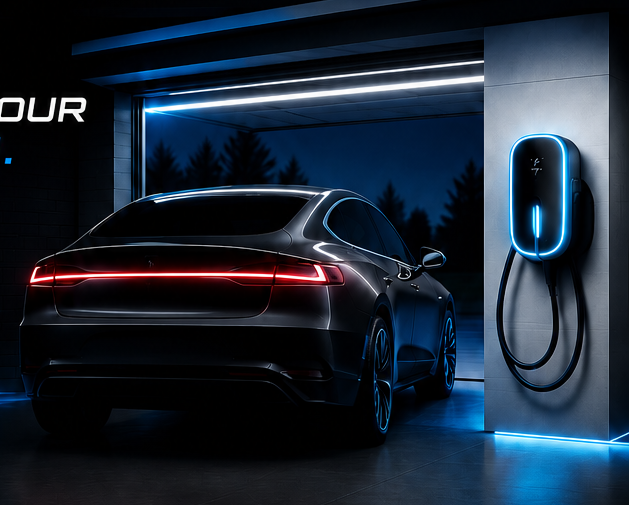
Summer heat can affect charging speed, battery conditioning and the temperature of cables and enclosures. Modern vehicles and charging equipment are designed with protective controls, but owners should not cover, modify or override them. The practical plan is to install listed equipment for the environment, keep required clearances and recognize signs that need service.
Check the installation environment
Confirm whether the charger is installed indoors, outdoors or in a space that becomes much hotter than the surrounding air. Review the product’s operating-temperature range, enclosure rating and ventilation or clearance instructions. Outdoor installations need outdoor-rated equipment, as the U.S. Department of Energy notes.
Do not build a cabinet, fabric cover or storage wall around a charger unless the manufacturer expressly permits the arrangement. Keep combustible storage, lawn chemicals and objects that can block airflow away from the equipment.
Expect the vehicle to manage its battery
Battery thermal management can use energy before or during charging. The vehicle may reduce charging power, run fans or pumps, or delay certain functions. Follow the exact owner manual and in-car messages. A reduced rate in high heat does not by itself prove the wall unit is defective.
Observe the cable and connection
- Keep the cable out of direct tire paths and away from sharp edges.
- Store the connector in its holster when not in use.
- Look for cuts, crushed areas, exposed conductors or a loose connector shell.
- Stop for unusual heat, discoloration, odor or repeated faults.
- Do not cool electrical equipment with water or improvised fans.
Use scheduling carefully
Charging during cooler overnight hours may suit the household routine and utility rate, but a schedule must still provide the required energy before departure. Coordinate the vehicle schedule, charger schedule and any time-of-use rate so two independent timers do not prevent charging.
Compare behavior with reliable records
If charging seems slower, record ambient conditions, starting battery percentage, energy delivered, session length and any vehicle or charger limit. The Department of Energy explains that charge time varies with state of charge, battery capacity, vehicle onboard charger, charging-equipment power and electrical service. Compare similar sessions before concluding that heat is the only cause.
Know when to stop
Stop using the equipment for visible damage, water intrusion, a burning odor, unusual heat, arcing or recurring breaker operation. A qualified electrician can check the circuit and terminations; the vehicle or charger manufacturer can address equipment-specific faults. Avoid opening energized equipment.
FAQ
Is a warm charging cable always unsafe?
Some warmth may occur, but the manufacturer defines acceptable operation. Unusual heat, odor, discoloration or changing connector fit requires attention.
Should I leave the garage door open while charging?
Follow the vehicle and charger instructions and the garage’s ventilation design. Do not defeat building security or required fire separation based on a generic rule.
Can heat permanently reduce charging speed?
One hot session is not enough to diagnose a permanent problem. Record repeatable conditions and consult the vehicle or charger maker if the limitation persists.
Does shade make outdoor equipment weather-rated?
No. Shade can change temperature exposure, but the equipment and installation still need the required outdoor rating and manufacturer-approved mounting.
SOURCES CHECKED OCTOBER 5, 2026
U.S. Department of Energy: Home Charging · U.S. Department of Energy: Charging Equipment · Tesla: Range Tips
PLAN A SAFER HOME-CHARGING SETUP
Talk through the vehicle, parking position and electrical service before equipment is selected.
EV Garage Install can review the installation scope and prepare a practical quote for a code-compliant home charging circuit.