


EXTENDED TRAVEL • HOME CHARGING
HOME EV CHARGING BEFORE EXTENDED TRAVEL: WHAT TO CHECK
Long-term parking needs the vehicle maker’s storage guidance, a safe charging setup and clear account access—not a guess about charge percentage.
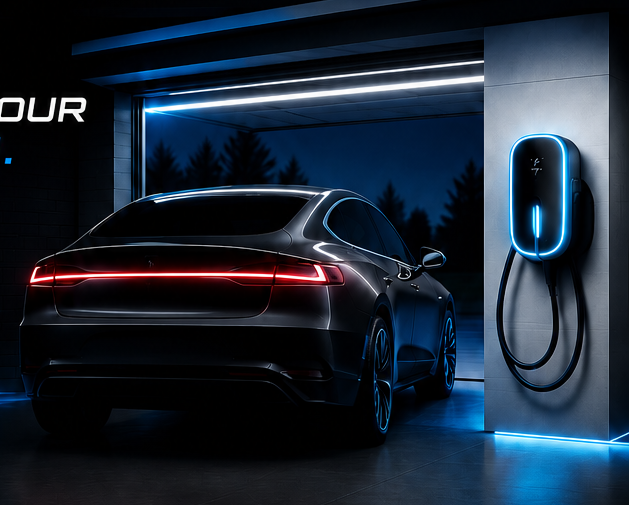
Leaving an electric vehicle at home for several days or weeks raises different questions from an ordinary overnight charge. The correct battery target and whether the vehicle should remain connected are vehicle-specific. Start with the current owner manual and manufacturer support page, then make sure the home charging equipment is in normal condition before departure.
Before departure, review the installation and handoff process and keep the home charging service information with the equipment records.
Follow the exact vehicle storage guidance
Battery chemistry, software and energy use while parked vary by vehicle. Check the manufacturer’s recommended charge limit, storage instructions and minimum state of charge for the expected trip length and weather. Do not copy another driver’s percentage or apply one brand’s guidance to another vehicle.
Inspect the charging path without opening equipment
Look at the cable, connector, enclosure and vehicle inlet. Stop if there is damage, looseness, discoloration, unusual heat or evidence of water intrusion. Confirm the connector can be fully seated and the cable will not be pinched by a door, run over or stretched across a walking path. Do not use an extension cord or improvised adapter.
Plan for normal operation, not remote rescue.
A connected app can report status, but it cannot make damaged equipment safe. Resolve visible problems before travel and give any trusted helper simple stop conditions.
Review schedules, limits and access controls
Confirm the charge limit in the vehicle and any schedule in the charger or utility program. Two competing schedules can prevent an expected session. Check which household member owns the charger account and who can view status without sharing a primary password. If remote access is not needed, do not create extra accounts solely for the trip.
Consider household power interruptions
A brief outage may leave some chargers or network features offline until they reconnect. Review the manufacturer’s documented behavior and troubleshooting steps. Do not instruct an unqualified helper to remove covers or repeatedly reset a breaker. If equipment reports a recurring fault or a protective device operates again, charging should stop for qualified evaluation.
Leave a concise home-charging note
Record the vehicle, charger model, expected departure date, target charge range, normal status-light description and manufacturer support link. Include the installer or service contact and emergency instructions appropriate to the household. Never include passwords, access codes or instructions to work inside electrical equipment.
Check the vehicle when you return
Before driving, confirm the vehicle’s state of charge and review alerts. Examine the cable and connector as part of the normal unplugging routine. If the session history shows repeated interruptions or the equipment appears abnormal, preserve the messages and arrange evaluation instead of clearing every alert.
Before-you-leave checklist
- Confirm the vehicle maker’s storage guidance
- Inspect the visible cable, connector and enclosure
- Review charge limits and competing schedules
- Check account ownership and notification access
- Leave a safe stop-condition note for a trusted helper
FAQ
Should an EV stay plugged in for a long trip?
Follow the exact vehicle manufacturer’s current guidance. The answer can depend on the vehicle, battery and planned storage duration.
Is 100 percent the right storage target?
Do not assume so. Use the vehicle maker’s recommended limit for routine charging or extended parking.
Can a neighbor reset the charger if it goes offline?
They should use only the documented user-level procedure and stop if there is damage, heat, odor, smoke, water or repeated protective-device operation.
Should I disable every schedule?
Not automatically. Review the vehicle, charger and utility schedules together and keep the arrangement the manufacturer supports for the planned storage period.
SOURCES CHECKED OCTOBER 5, 2026
Tesla: Range and Charging Tips · U.S. Department of Energy: Home Charging · ENERGY STAR: EV Chargers
PLAN THE COMPLETE INSTALLATION
Match the vehicle, equipment and electrical system.
Send the vehicle details, proposed charging location and safely taken photos of accessible electrical labels. EV Garage Install can discuss the installation scope and prepare a practical quote.