

DOCUMENTATION • CIRCUIT IDENTIFICATION
EV CHARGER CIRCUIT LABELS:
MAKE THE INSTALLATION CLEAR
Good labeling connects the charger to the correct panel circuit and supporting documents, making future service, troubleshooting, and handover more orderly.
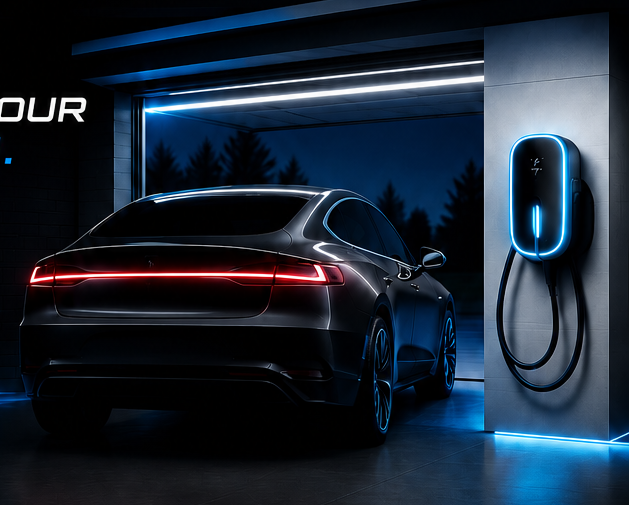
An EV charger is easier to own and service when its circuit and equipment are clearly documented. A useful handover record lets a qualified electrician identify the charger, the supplying circuit, the configured output, and the installation documents without guesswork.
Connect the equipment to the panel directory
The electrical panel directory should clearly identify the circuit supplying the charger. The wording needs to distinguish it from garage receptacles, lighting, HVAC equipment, or another charging circuit. If a property has more than one panel, the record should also identify the correct panel.
Labels should be durable, legible, and consistent with the completed installation. Do not relabel a breaker or assume a circuit’s identity without qualified verification. The name on a directory is not proof of conductor size, breaker rating, or installation condition.
Keep a one-page charger record.
List the manufacturer, model, serial number, connector type, circuit identifier, configured current, installation date, permit or inspection references when applicable, and the location of manuals and warranty documents.
Record settings as well as hardware
Some chargers allow output current, schedules, access control, or managed-load behavior to be configured in software. Record the commissioned values and who can change them. A replacement phone or account transfer should not erase the property’s understanding of how the equipment was set up.
If the charger participates in a load-management system, identify the related sensor or controller and keep its instructions with the charger record. Do not disable that function to chase a faster session.
Photograph only accessible information
Useful photos include the installed charger, visible nameplate, parking position, cable reach, and closed panel directory. Avoid removing covers or reaching into electrical equipment. Keep photos free of account passwords, network credentials, and unrelated personal documents.
Update the record after a charger replacement, panel project, circuit change, or configuration adjustment. Old labels and stale screenshots can be more confusing than no record at all.
Make the handover useful to the next owner
A home sale or equipment transfer should include manuals, support contacts, app transfer steps, and a clear statement of what stays with the property. Product account transfer and electrical documentation are related but separate tasks.
EV Garage Install’s installation services and project process can help define the documentation expected with a new installation. Ask that the final scope identify the charger and electrical work separately.
EV charger labeling questions
Is a handwritten panel directory acceptable?
The controlling requirements depend on the installation and locally adopted rules. The important practical point is that the final directory be legible, accurate, and durable; confirm specifics with the installer and authority having jurisdiction.
Should the charger itself show the breaker size?
Do not add technical labels based on assumptions. Preserve manufacturer labels and have any installation-specific marking prepared from verified project information.
What if the panel description does not match the charger?
Do not guess or test by opening equipment. Arrange qualified identification and correct the documentation after the circuit is confirmed.
Why record the configured current?
It provides context for future service and helps prevent an account or software change from silently conflicting with the commissioned setup.
PRIMARY SOURCES CHECKED OCTOBER 6, 2026
U.S. DOE home charging guidance · ENERGY STAR charger information · Tesla Wall Connector support
PLAN THE COMPLETE INSTALLATION
Match the vehicle, equipment and electrical system.
Send your address, vehicle details, charger model, and safely taken photos of the proposed location and accessible equipment labels. EV Garage Install will discuss the scope and next assessment step.