


CHARGING DATA • HOME RECORDS
Track the energy.
Explain the numbers.
Charger, vehicle and utility records can measure different things. A simple record helps homeowners understand what each number represents.
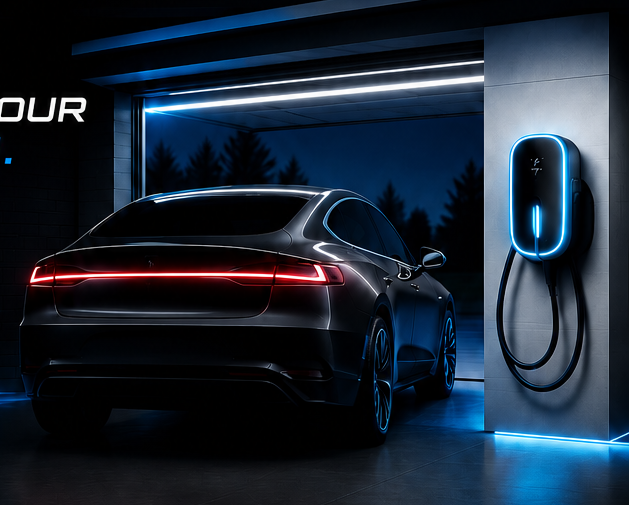
Home EV charging records can help with household budgeting, employer reimbursement, vehicle comparisons and service questions. The charger app, vehicle app and utility bill may report different totals because they measure at different points and use different time periods. Treat those records as related—not automatically identical.
Start with the question the record must answer
Decide whether you need energy delivered by the charger, energy accepted by the vehicle, charging cost during a billing cycle or proof of specific sessions. A monthly household estimate requires different detail than a dated reimbursement log.
Use kW and kWh correctly.
kW describes power at a moment; kWh describes energy over time. Record the unit shown instead of labeling every number as “usage.”
Separate the three data sources
The charger may report session energy and timestamps. The vehicle may report battery energy or charging history. The utility meter measures household electricity and may apply time-of-use periods, taxes or other charges. Losses and timing boundaries can create differences even when the systems operate normally.
Record schedules and setting changes
Note the charger current setting, vehicle charge limit, active schedule and utility rate period. If a schedule changes mid-month, record the date. When troubleshooting, include interrupted sessions, app messages and whether charging later resumed. Do not share account passwords or private vehicle-location data with a general service request.
Keep ownership and export access clear
Identify who owns the charger account and how data is exported. If the charger is replaced or the home is sold, download needed records before removing the device or transferring the account. Manufacturer retention periods and export formats can change, so verify the current support instructions for the exact product.
For a new installation, ask whether the proposed charger offers the records you need. Review our home charging services and installation process before selecting connected features.
EV charging record questions
Why does the charger total differ from the vehicle total?
They may measure at different points, use different time windows or account for losses differently. Review each product’s definition.
Can the charger app prove my utility cost?
Not by itself. Utility rates, billing periods and fees come from the utility account. Use the app as one input.
Should I leave both charger and vehicle schedules active?
Multiple schedules can conflict. Choose a clear control strategy and document it.
What should a monthly log include?
Record date range, kWh source, active schedule, rate source, major setting changes and any excluded sessions.
SOURCES REVIEWED OCTOBER 8, 2026
U.S. DOE EV consumer guidance · U.S. DOE home charging guidance · ChargePoint app features
LET’S PLAN YOUR INSTALLATION
Your garage. Your vehicle. A clear plan.
Send your address, vehicle details, and safely taken photos of the proposed charging location and accessible electrical labels. EV Garage Install will discuss the scope and next assessment step.