


WORK VEHICLE • HOME CHARGING
Serve the workday.
Protect the household plan.
A company or work vehicle adds mileage, reporting and account-ownership questions to a residential installation.
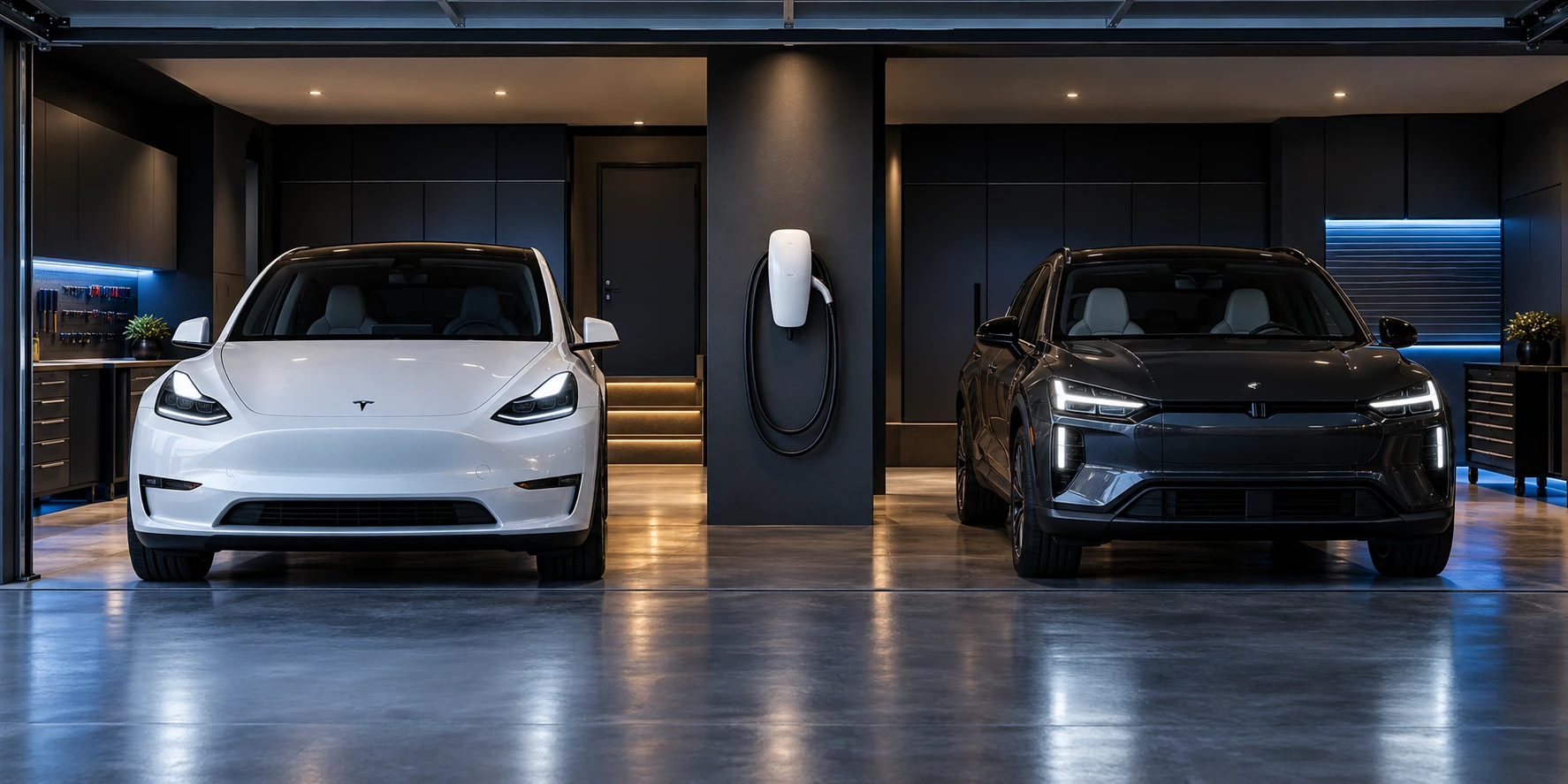
Home charging for a work vehicle should be planned around the vehicle’s daily route, dwell time, employer requirements and the home’s electrical capacity. A charger that is adequate for occasional personal use may need a different operating plan for a vehicle that must be ready every morning.
Define the duty cycle with real numbers
Record typical and high daily mileage, arrival and departure times, the vehicle’s usable charging input and the energy that must be restored overnight. Avoid selecting equipment from the vehicle’s maximum rating alone; the home and route determine what can be installed and used.
Employer policy comes before reimbursement assumptions.
Confirm approved equipment, documentation, account ownership and reimbursement rules in writing. Do not promise that any charger report will automatically satisfy payroll or tax requirements.
Separate business and household records
Decide whether the charger, vehicle or utility account will provide session data. Record date ranges, kWh units, schedule changes and personal sessions that should be excluded. Protect account passwords and private route history.
Plan parking and access
The work vehicle may be larger or return with tools, trailers or cargo. Confirm the cable reaches its inlet without crossing a traffic path. Identify who may unplug or move the vehicle and whether a second household EV also needs charging.
Set ownership and service responsibility
State who owns the charger, pays network fees, authorizes firmware updates and handles warranty claims. If employment or vehicle assignment changes, define whether the equipment stays with the home and how accounts are transferred.
Review our home EV charging services and installation process.
Work-vehicle charging questions
Does the employer choose the charger?
It depends on company policy. Obtain written equipment and reporting requirements before purchase.
Can one charger serve personal and work vehicles?
Potentially, but the schedule, connector compatibility, access and recordkeeping must match both uses.
Does charger data equal the utility bill?
Not necessarily. They can use different measurement points and billing periods.
What should I send for a quote?
Send vehicle details, daily mileage, dwell time, employer requirements, parking photos and accessible electrical labels.
SOURCES REVIEWED OCTOBER 8, 2026
U.S. DOE charging infrastructure planning · U.S. DOE consumer EV guidance · U.S. DOE home charging guidance
LET’S PLAN YOUR INSTALLATION
Your garage. Your vehicle. A clear plan.
Send your address, vehicle details, and safely taken photos of the proposed charging location and accessible electrical labels. EV Garage Install will discuss the scope and next assessment step.