

WATER EXPOSURE • SAFE RESPONSE
Keep clear of wet equipment.
Assess before charging again.
Storm runoff, flooding or a plumbing leak can affect the charger, receptacle, circuit route and vehicle connection even when the enclosure looks intact.
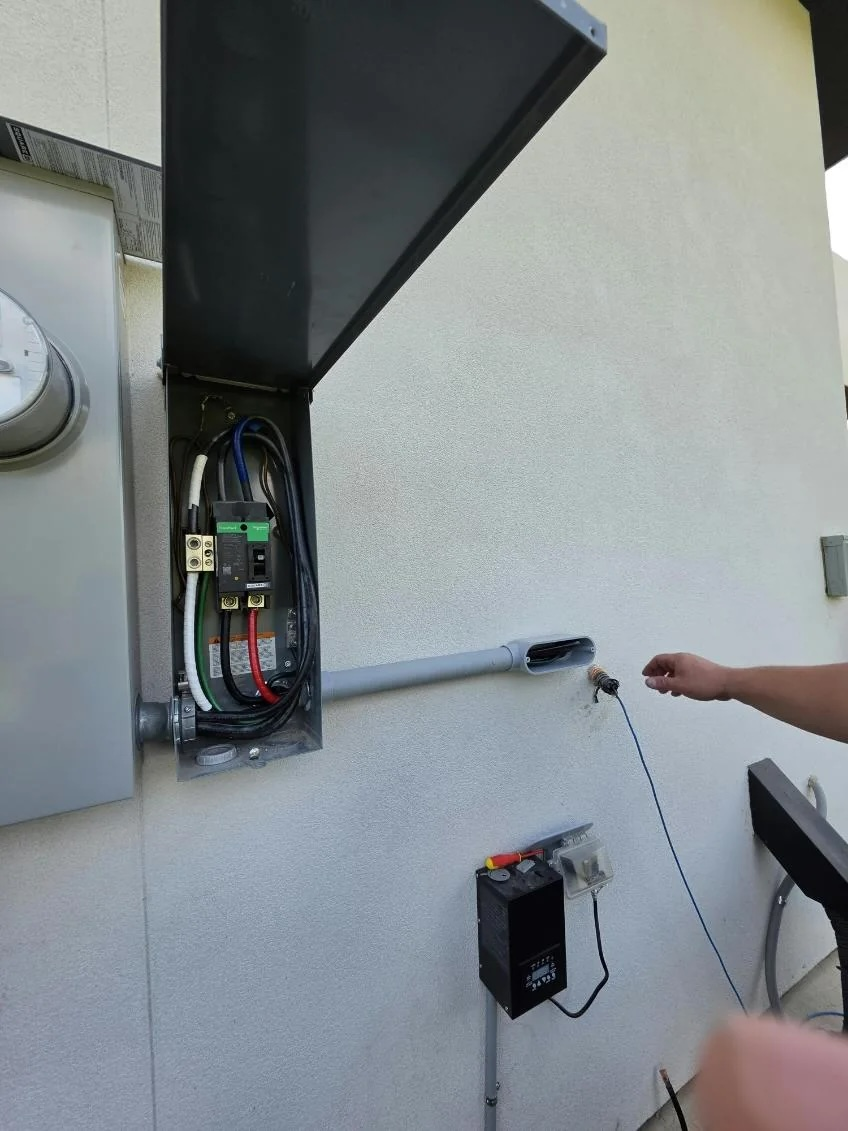
Water exposure changes the question from “Will it charge?” to “Can the complete system be approached and evaluated safely?” Do not plug in a vehicle, touch wet electrical equipment or stand in water near the charger. A quick reset or successful app connection does not prove that wiring, terminals, protective devices and internal electronics are undamaged.
Keep people away from the affected area
Prevent family members, tenants and contractors from approaching the charger or cable while water is present. Do not move a wet connector, pull a plug or operate a nearby disconnect if doing so requires entering water or touching wet equipment. Emergency conditions, smoke, arcing or fire belong with emergency services and the utility, not a charging test.
Dry appearance is not an electrical clearance.
Water can remain inside raceways, receptacles, enclosures and wall cavities after the visible surface dries.
Document conditions from a safe distance
Photograph the water line, source, charger exterior, cable location and nearby panels without entering the affected area. Record whether the exposure was clean water, stormwater, irrigation, sewage or salt-contaminated water because contamination can change the damage assessment. Note any indicator lights, odor, noise or visible discoloration without touching the equipment.
Let qualified parties define isolation and testing
The utility, emergency personnel or a qualified electrical professional may need to establish a safe condition before inspection. Do not assume that turning off an app, vehicle or branch breaker makes every wet component safe. Equipment manufacturers also have product-specific limits for water exposure, cleaning, replacement and warranty service.
Evaluate more than the charger enclosure
The scope may include the wall connector, plug and receptacle, junction boxes, conductors, raceway, grounding and bonding path, breaker, surge equipment and vehicle inlet. Floodwater can carry silt and corrosive contaminants. Components not intended for immersion may need replacement even when they later operate.
Plan the return to service
Before charging resumes, identify what was inspected, tested, cleaned or replaced and who authorized the equipment for use. Restore software settings only after the electrical work is complete. Record the charger model, circuit identification, current setting and any new warranty information.
Use our EV charger assessment services to discuss the electrical scope and our process page to prepare safe project information.
Water-exposure questions
Can I test the charger after the outside dries?
Not on appearance alone. Internal components and the circuit path may still be wet or contaminated.
Should I unplug a portable charger from a wet receptacle?
Do not touch it while the area or equipment is wet. Have the condition made safe first.
Does an outdoor enclosure make flood exposure acceptable?
No. Weather resistance under stated installation conditions is different from immersion or flood contamination.
What information helps with an assessment?
Provide safe photos, the water source and height, charger model, circuit location, time of exposure and any official emergency or utility instructions.
SOURCES CHECKED OCTOBER 9, 2026
FEMA electrical utility systems guidance · Ready.gov flood safety guidance · FEMA severe-weather documentation guidance
LET’S PLAN YOUR INSTALLATION
Your garage. Your vehicle. A clear plan.
Send your address, vehicle details, and safely taken photos of the proposed charging location and accessible electrical labels. EV Garage Install will discuss the scope and next assessment step.