
North Texas home EV charging guide
NEW NOISE OR SMELL?
PAUSE AND CHECK IT
Unusual sound, odor, heat or discoloration deserves a calm, safety-first response—not guesswork.
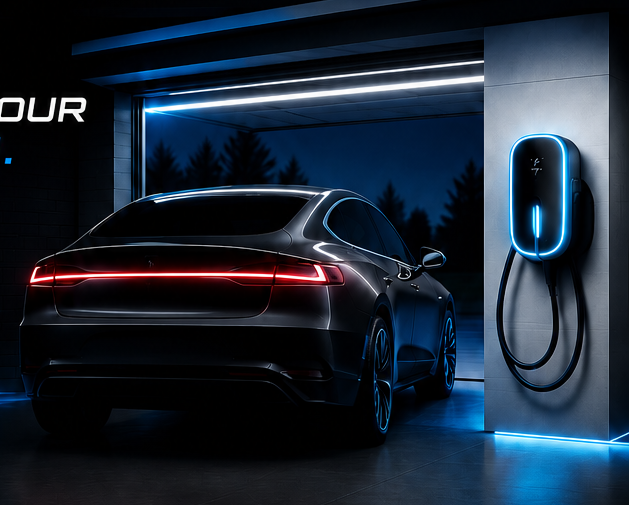
A home charging system may make normal relay clicks, fan noise or brief electronic sounds described by its manufacturer. A sound or odor that is new, persistent or paired with heat, discoloration, smoke, arcing or repeated faults is different. Stop the charging session and treat the change as a condition that needs review.
First, end the charging session safely
If the vehicle and charging equipment controls respond normally, stop the session using the manufacturer’s normal process and unplug only when it is safe to do so. Do not touch equipment that is smoking, sparking, visibly damaged or unusually hot. Move away and call emergency services if there is fire, active arcing or immediate danger.
The U.S. Fire Administration advises owners never to use charging equipment with obvious damage. Do not remove covers, open the electrical panel or try to tighten energized parts.
Record the evidence without disturbing the equipment
Write down the charger model, the vehicle, the approximate time, charging duration, app error code and whether the issue happened immediately or after charging for a while. Photograph visible discoloration or damage from a safe distance. A short recording may help identify a repeated buzz, rattle or fan sound.
Keep the connector, cable and wall unit in their observed condition until the manufacturer or a qualified electrician gives instructions. Resetting repeatedly can erase useful fault information and may re-energize a damaged condition.
Separate equipment questions from circuit questions
The source may be the charging unit, vehicle inlet, connector, receptacle, branch circuit, breaker or a connection point. A qualified evaluation checks the whole charging path rather than assuming the wall unit is solely responsible.
A manufacturer can interpret model-specific error codes and normal operating sounds. A licensed electrical professional can evaluate the premises wiring, connections and overcurrent protection. The right path may involve both.
Check the exact model and recall status
Find the model and serial number on the equipment label and compare them with manufacturer notices and the CPSC recall database. A brand name alone is not enough because recalls may apply only to particular model or production ranges.
Follow the official remedy if the unit is recalled. Do not improvise a repair or rely on a marketplace seller’s description of recall status.
Plan the return to service
Charging should resume only after the cause is understood and any required correction is complete. The closeout should identify what was inspected, what changed, and any manufacturer instructions that remain in effect.
If replacement is recommended, confirm the new equipment’s electrical rating, listing or certification mark, mounting location and compatibility before installation.
Frequently asked questions
Is a relay click normal?
Many charging units use relays and may click as a session starts or stops. Use the model’s manual to distinguish an expected sound from a new, repetitive or unusually loud one.
What does a hot-plastic smell mean?
It can indicate overheated material, but the source cannot be confirmed by odor alone. Stop using the equipment and arrange an inspection.
Should I reset the breaker?
Not repeatedly. A breaker operation or recurring fault needs a cause, not repeated resets. Follow manufacturer guidance and use a qualified electrician for circuit evaluation.
Can I use another charger meanwhile?
Only use charging equipment and an outlet or circuit known to be suitable, undamaged and compatible. Do not use extension cords or adapters unless the vehicle and equipment manufacturers expressly allow them.
Who should I call first?
For a charger error, contact the manufacturer; for heat, wiring, breaker or receptacle concerns, contact a licensed electrician. Call emergency services for smoke, fire or active arcing.
Official safety references
For general charging safety, review the U.S. Fire Administration electric vehicle fire safety guidance. For product certification context, see the OSHA Nationally Recognized Testing Laboratory program. Product recall information is available through the U.S. Consumer Product Safety Commission recall database.
Get a site-specific EV charging plan
Every garage, circuit route, electrical service and charger model is different. EV Garage Install can evaluate the installation conditions and build a clear scope for your home.