

North Texas home EV charging guide
AFTER A SEVERE STORM
INSPECT BEFORE CHARGING
Wind, water, debris and utility disturbances can change conditions around a charging system even when the unit looks normal.
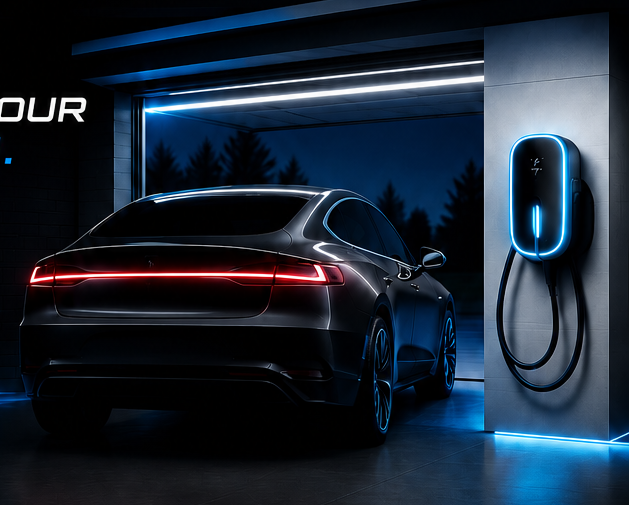
A severe storm can affect more than the electricity supply. Wind-driven debris, standing water, roof leaks, lightning-related surges and utility interruptions may change the condition of the charging unit, cable, circuit or surrounding structure. Before the next session, perform a cautious visual check and stop if anything is uncertain.
Wait for the environment to be safe
Do not enter a flooded garage, touch equipment near standing water or approach damaged electrical service components. If the building has fire, structural or utility damage, follow emergency and utility instructions before considering vehicle charging.
Keep the vehicle disconnected until the charging area is dry, stable and free of downed wiring or damaged equipment.
Inspect without opening electrical equipment
From a safe distance, look for a displaced charger, cracked enclosure, damaged cable, bent connector, scorch marks, water tracks, debris impact or loose mounting. Check whether the connector holster still keeps the plug protected.
Do not remove the charger cover or electrical-panel dead front. Internal inspection and electrical testing belong to qualified personnel.
Review faults and power events
Check the charger and vehicle apps for recorded faults, interrupted sessions or error codes. Note the time of the storm and any outage or utility notice. Do not clear a repeating fault simply to see whether it returns.
A tripped breaker, failed surge device, unusual odor or new noise is a reason to pause and have the system evaluated.
Understand water exposure
Outdoor-rated or weather-resistant equipment is not automatically suitable after submersion, enclosure damage or water entry. Follow the manufacturer’s exact guidance for inspection, drying, repair or replacement.
Never assume that energizing the unit will safely dry it. Water exposure can affect components and connections that are not visible.
Document the return to service
If professional review is needed, provide the charger model, installation records, photographs and fault history. The review should cover the equipment, mounting, cable, branch circuit and any affected upstream components.
Retain notes on repairs or replacement for future service and insurance questions.
Frequently asked questions
Can I charge after a brief outage?
If there is no visible damage or fault and the manufacturer allows automatic recovery, normal use may resume. Investigate any repeated fault, heat or odor.
What if rain reached the connector?
Follow the manufacturer’s instructions. Do not use a connector with visible contamination, damage or trapped water.
Should I reset a tripped breaker?
A storm-related trip should not be reset repeatedly. Have the cause evaluated if conditions are uncertain or the breaker trips again.
Does an outdoor rating cover flooding?
Not necessarily. Weather resistance and submersion are different conditions; consult the exact product documentation.
Who checks the utility service?
Contact the utility for service-side damage and a licensed electrician for premises wiring and charging-circuit concerns.
Official safety references
Review the U.S. Fire Administration electric vehicle fire safety guidance, the OSHA Nationally Recognized Testing Laboratory program, and the U.S. Consumer Product Safety Commission recall database. Equipment instructions and locally adopted requirements control the final installation details.
Get a site-specific EV charging plan
Every garage, circuit route, electrical service and charger model is different. EV Garage Install can evaluate the installation conditions and build a clear scope for your home.