

North Texas home EV charging guide
FINISHED WALL ROUTING
PLAN THE OPENINGS FIRST
A clean final installation depends on the hidden path, inspection needs and repair scope being settled before cutting begins.
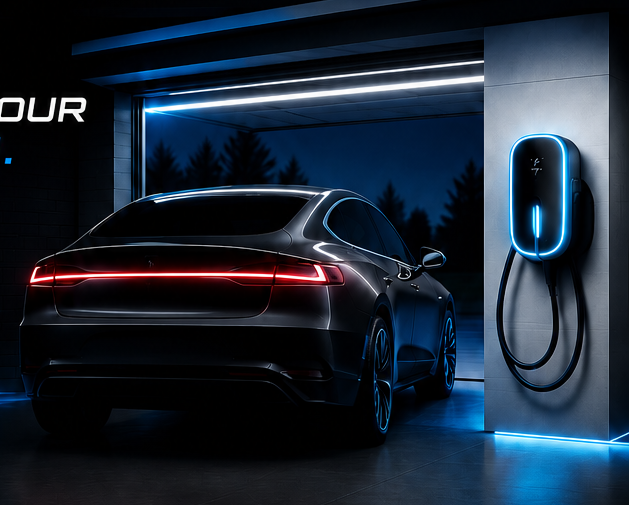
Installing a home EV charger in a finished garage often means the electrical panel and parking location are separated by drywall, framing, insulation, masonry or another occupied space. The circuit can still be planned neatly, but the route and restoration responsibilities should be defined before work begins.
Survey both sides of the wall
Identify panel location, charger mounting height, framing direction, attic or crawl access, cabinets, plumbing, mechanical equipment and known utilities. A stud finder is not a substitute for understanding the building path.
The installer may propose an interior concealed path, a surface raceway or an exterior transition. Each option changes access, appearance and restoration.
Choose access openings deliberately
Small, well-placed openings can reduce unnecessary damage and make conductor installation and inspection practical. The scope should identify expected opening locations and whether conditions behind the wall could change the plan.
Do not promise a completely opening-free route when the concealed conditions are unknown.
Preserve required protection
Wiring must use an approved method, be supported and protected from fasteners or physical damage, and maintain required separation and fire-resistance details under applicable rules. Penetrations may need approved sealing or fire-stopping.
Local code adoption and the building assembly determine the exact requirements. The installer and inspector—not a generic blog—control the final design.
Coordinate inspection and closure
Some jurisdictions require the wiring to remain visible until inspection. Closing walls too early can lead to reopening and added cost. Confirm the inspection sequence before scheduling drywall repair or painting.
Photographs of the open route can become useful service documentation once the wall is restored.
Assign finish repair responsibility
The proposal should state who patches drywall, matches texture, paints, repairs tile or masonry and moves stored items. Electrical contractors and finish trades may have different scopes.
Define what “patching” means: a rough close, paint-ready finish or complete cosmetic restoration.
Frequently asked questions
Can every EV circuit be hidden in the wall?
No. Structure, access, wiring method, inspection and cost may make a surface pathway more appropriate.
Will the electrician repaint the wall?
Only if the written scope says so. Clarify patching, texture and paint before work starts.
Can the wall be closed before inspection?
That depends on local procedure. Confirm the required inspection point before restoration.
Is surface raceway unattractive?
A planned route can be tidy and serviceable. Color, alignment and charger placement affect the final appearance.
Should concealed routing be photographed?
Yes, when permitted. Photos can document the path for future drilling, service or remodeling.
Official safety references
Review the U.S. Fire Administration electric vehicle fire safety guidance, the OSHA Nationally Recognized Testing Laboratory program, and the U.S. Consumer Product Safety Commission recall database. Equipment instructions and locally adopted requirements control the final installation details.
Get a site-specific EV charging plan
Every garage, circuit route, electrical service and charger model is different. EV Garage Install can evaluate the installation conditions and build a clear scope for your home.