


GARAGE RENOVATION • CHARGER REMOVAL
Define what comes off.
Document what goes back.
Paint, cabinets, drywall and structural work can affect a charger installation even when the electrical circuit is not part of the remodel.
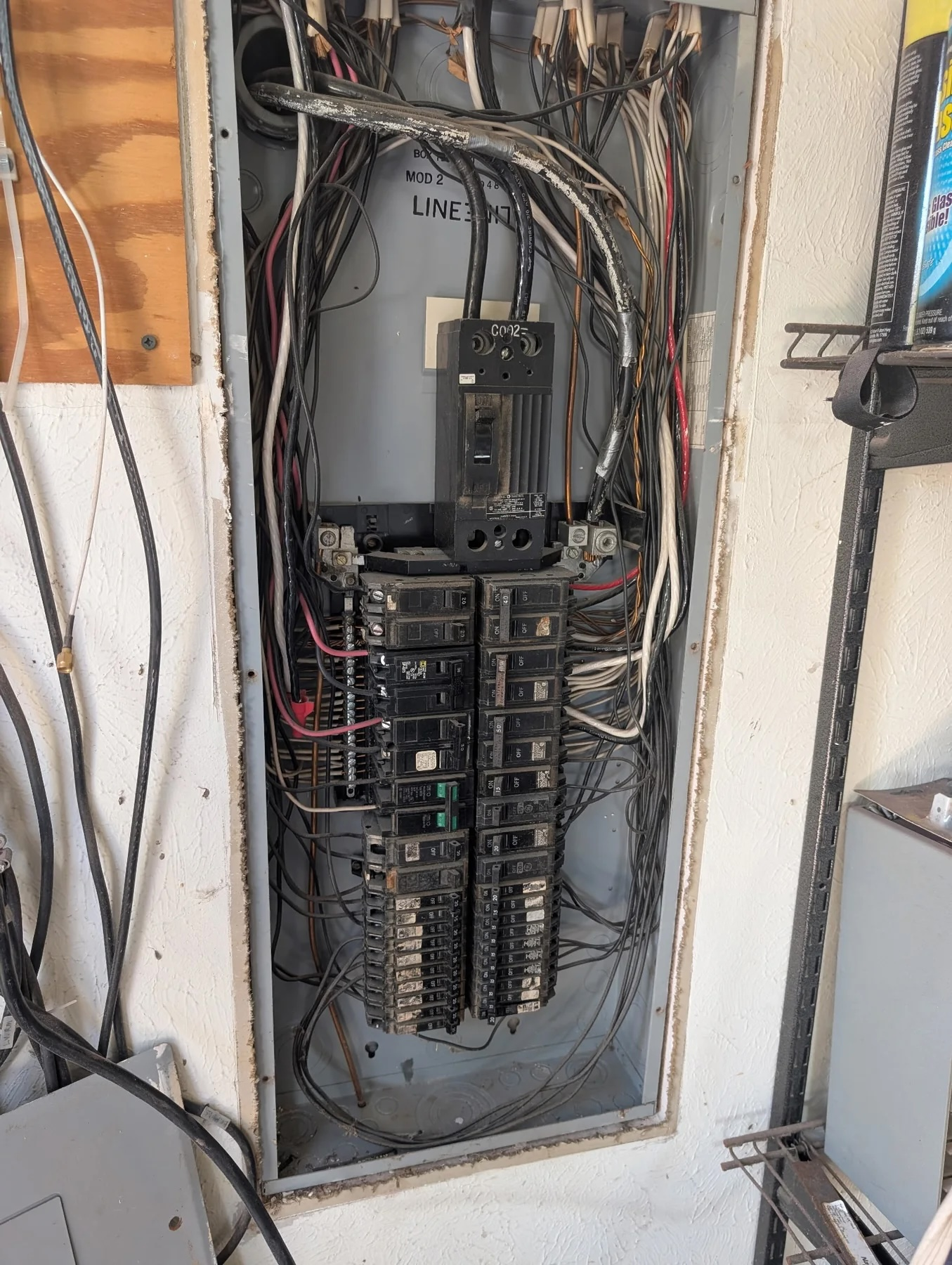
A garage renovation can place an installed charger in the path of demolition dust, wall removal, cabinetry, moisture and impact. Before work starts, decide whether the charger will stay protected in place, be temporarily removed, be relocated or be replaced. The plan should cover both the visible equipment and the circuit behind the wall.
Define the renovation boundary
Mark every wall, ceiling and floor area that will be opened, painted, coated or rebuilt. Identify the charger, cable hook, receptacle if present, raceway, junction boxes and circuit route. Cabinet depth, new wall finishes and storage layouts can change connector reach or block required access.
A removed charger is not an abandoned circuit.
The conductors, box, raceway and breaker must be left in an approved, identified condition throughout construction.
Assign electrical work before demolition
The renovation proposal should state who isolates the circuit, removes equipment, protects conductors and closes openings. General demolition crews should not move a charger or cut raceway simply because it blocks their work. Coordinate the sequence so electrical equipment is made safe before wall demolition begins.
Record the original installation
Before removal, capture the charger model, serial number, current setting, circuit label, mounting height, cable reach and app ownership. Photograph the exterior arrangement and accessible labels. Keep mounting hardware and product-specific parts together in a labeled container if the manufacturer permits reuse.
Protect equipment during construction
Dust, paint spray, joint compound and moisture can contaminate connectors and ventilation openings. Do not wrap energized equipment in a way that traps heat or blocks manufacturer-required clearances. If the charger remains, establish a no-impact zone and a storage method that keeps the cable off the floor and out of the work path.
Treat reinstallation as a commissioning event
Wall thickness, fastener locations, conductor length, box position and network conditions may change during the remodel. Reinstallation should follow the current instructions for the exact product, confirm the circuit and current setting, restore cable support and test operation with the intended vehicle. Update the installation record if any component or route changed.
See our EV charger installation services and assessment process when planning a renovation handoff.
Renovation-removal questions
Can the painter remove a wall-mounted charger?
Electrical removal should be assigned to a qualified person following the product instructions and the approved project scope.
Can the charger hang from its conductors during wall work?
No. Equipment and conductors need proper support and protection; do not use wiring as a temporary hanger.
Will the original mounting hardware always be reused?
Not necessarily. Wall materials, manufacturer instructions and hardware condition determine what is suitable.
What should the final handoff include?
Keep the charger model, circuit label, current setting, app ownership, service record and any changed route or mounting details.
SOURCES CHECKED OCTOBER 9, 2026
Tesla Wall Connector replacement guidance · Tesla Wall Connector installation guidance · U.S. Department of Energy home charging guidance
LET’S PLAN YOUR INSTALLATION
Your garage. Your vehicle. A clear plan.
Send your address, vehicle details, and safely taken photos of the proposed charging location and accessible electrical labels. EV Garage Install will discuss the scope and next assessment step.