

BACKUP POWER • EV CHARGING
Protect backup power.
Coordinate the loads.
A home charger and standby generator can share a property, but the operating plan must match the actual transfer system and available capacity.
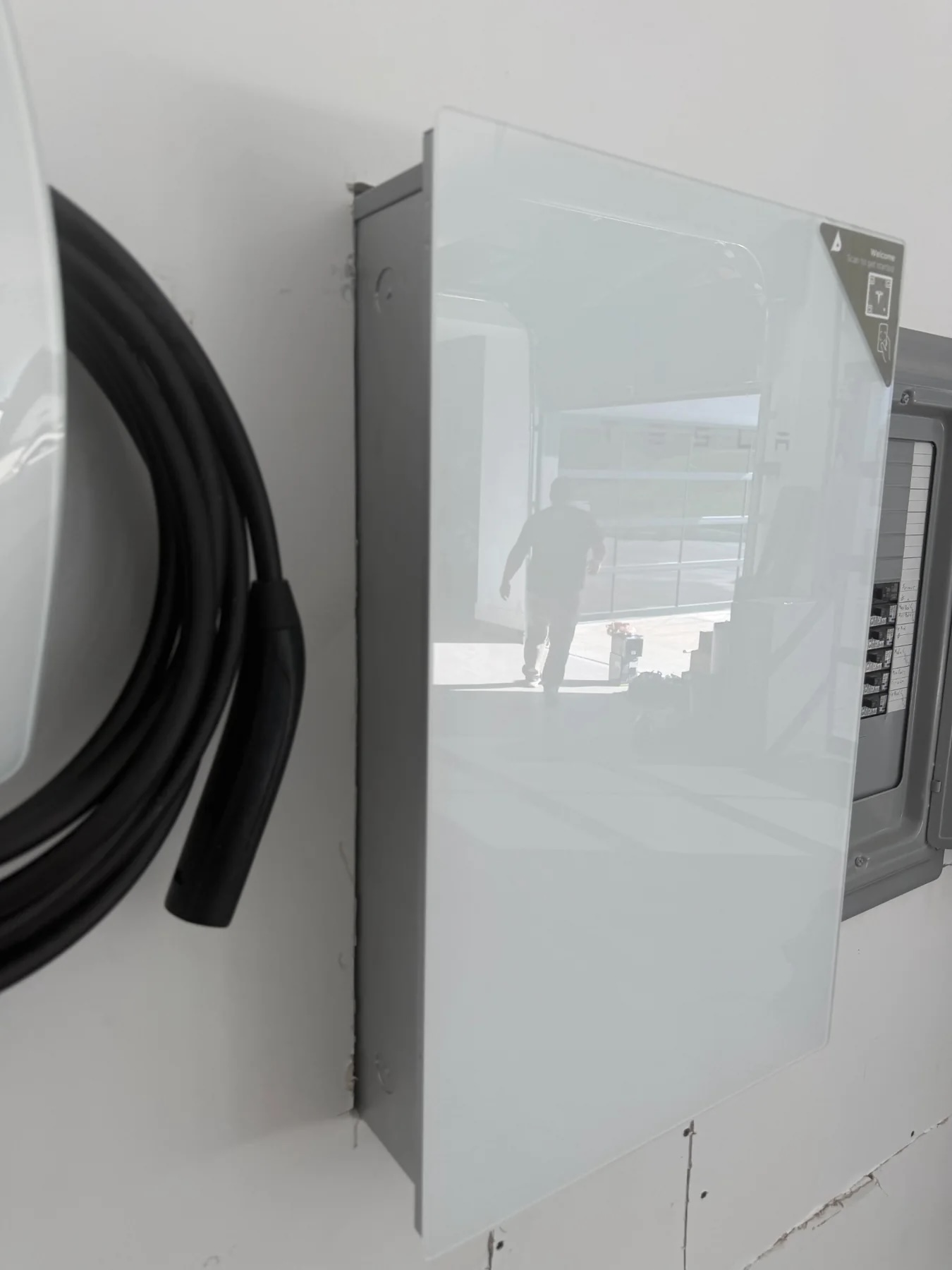
EV charging can be one of the larger adjustable loads in a home. During standby-generator operation, that load may compete with cooling, refrigeration, pumps and other priorities. Do not assume the charger will be supplied, blocked or automatically reduced merely because an automatic transfer switch is present.
Identify what the generator actually serves
Record the generator model, transfer equipment, backed-up panel arrangement and any load-management devices. The circuit feeding the charger may be outside the backed-up system, inside it or controlled by separate equipment. Only the project documents and a qualified assessment can establish the operating configuration.
Backup capacity is not the same as utility capacity.
A charging setting that is appropriate on normal utility power may not be appropriate during generator operation. The design should define the intended behavior.
Set backup priorities before commissioning
Decide whether vehicle charging is prohibited, delayed, reduced or allowed during an outage. Consider the energy needed for essential home loads and the fuel available for the generator. If the charger or energy-management system supports automatic control, verify that the specific products can communicate and fail safely in the proposed arrangement.
Never improvise a connection
Do not backfeed household wiring from vehicle outlets or connect a portable generator through an unapproved cord. Transfer equipment is intended to isolate sources and manage how power reaches the home. Vehicle-to-home systems, standby generators and ordinary EV charging are different systems with different commissioning requirements.
Include a real operating demonstration
The handoff should identify which loads transfer, how the charger responds, what indicators appear and how normal utility service is restored. Keep manuals and final settings with the electrical records. If a later charger, vehicle or generator change alters the design, request a new review.
EV Garage Install can assess the charging portion of a broader backup-power plan. Review our installation services and project process; final generator and transfer-equipment scope may require coordination with the responsible manufacturer and contractor.
Generator and EV charging questions
Will my charger automatically stop when the generator starts?
Only if the actual circuit and control design provide that behavior. Do not assume it.
Can I simply lower the charger setting during an outage?
A lower setting may reduce load, but the responsible professional must determine whether charging is allowed and appropriate for the backup system.
Does bidirectional charging replace a generator?
Not automatically. Vehicle-to-home equipment, compatibility, isolation, commissioning and operating limits must be confirmed for the exact system.
What should I provide for an assessment?
Send model information for the charger, generator and transfer equipment, a one-line diagram if available, and safely taken photos of accessible labels.
SOURCES REVIEWED OCTOBER 8, 2026
U.S. DOE home charging guidance · Generac EV charger information · Tesla Powershare support
LET’S PLAN YOUR INSTALLATION
Your garage. Your vehicle. A clear plan.
Send your address, vehicle details, and safely taken photos of the proposed charging location and accessible electrical labels. EV Garage Install will discuss the scope and next assessment step.